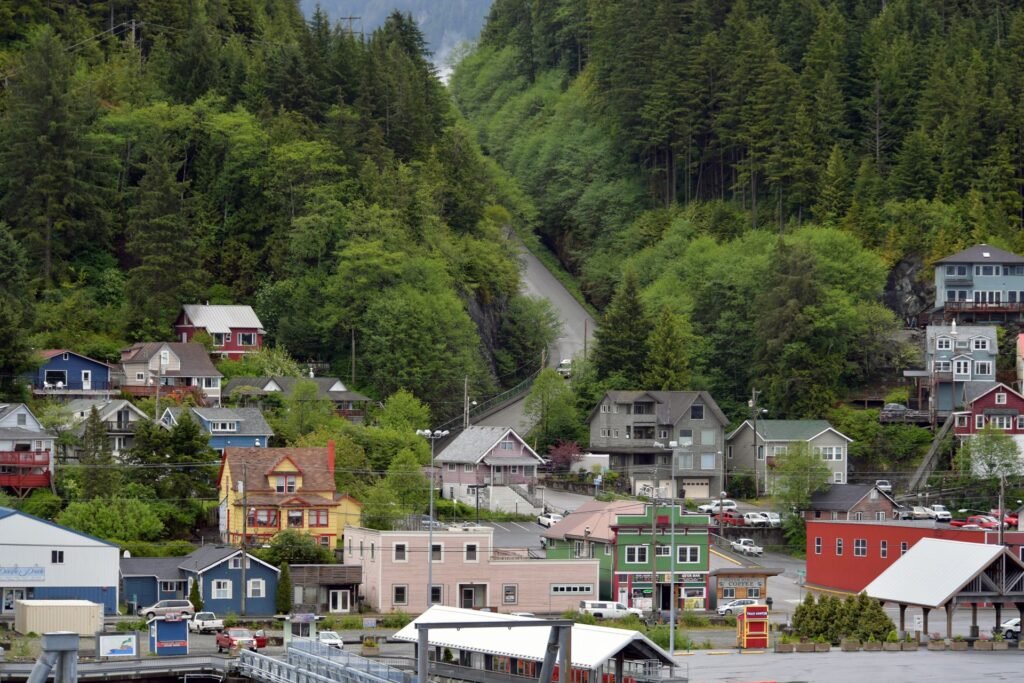
This Alaska cruise ports guide covers the three stops nearly every itinerary hits — Juneau, Ketchikan, and Skagway. The biggest mistake people make is treating them as interchangeable. They’re not. Each has a completely different character and a different signature experience, and knowing that in advance is the difference between a great port day and a wasted one.
A few things are true everywhere first. Your ship will spend roughly 8–12 hours in each port — enough for one full excursion, or two shorter activities plus some time on foot, but rarely both. All three ports dock within walking distance of downtown, so you can always explore for free. And check your ship’s exact arrival and departure times before you book anything — some itineraries dock in Juneau as late as early afternoon, which quietly kills the morning whale-watching departures.
One money note up front: in every port, booking excursions independently instead of through the ship’s desk usually saves you real money for the same tour. We cover exactly how in Alaska cruise excursions worth booking — the short version is “book independent, with an on-time-return guarantee.”
Now, port by port.
Juneau — glaciers and whales
Juneau is Alaska’s capital, and it’s the excursion capital of the Inside Passage too. There’s no road in or out — you arrive by sea or air — and the town sits right at the foot of the mountains with trailheads a few blocks from the dock. If a port is going to be your “big” day, this is usually the one.
The signature stops:
- Mendenhall Glacier (about 12 miles from downtown). The most accessible glacier of any Alaska port. The honest tip: the cruise-line tour runs $100+ per person, but the public bus gets you near the glacier for a couple of dollars each way — the best DIY value in any Alaska port. From the visitor center you can walk to Nugget Falls and the lakeshore.
- Whale watching. Juneau (along with Icy Strait Point) is one of the two best whale-watching ports in Alaska — feeding grounds and established operators make humpback sightings especially consistent. Independent boats run far smaller groups than the ship’s 150-passenger version. Compare operators on Klook or GetYourGuide.
- Mount Roberts Tramway. Right from downtown, up to alpine trails and views over the channel — an easy option if you want a big view without a full-day excursion.
- Helicopter glacier landings. The splurge — landing on the Juneau Icefield. Book early; these sell out 6–8 weeks ahead in peak summer.
Walkability: dock is about a 5-minute walk from downtown (Red Dog Saloon, crab shacks, shops). The glacier and whale grounds need transport.
Ketchikan — rainforest, totems, and salmon
Ketchikan is the “Salmon Capital of the World” and Alaska’s rainiest port — NOAA puts its annual average at about 149.5 inches, so bring the waterproofs (see the packing list). It sits on a thin strip between the water and the mountains, wrapped in the Tongass — the largest national forest in the U.S. It’s also the most walkable of the three, with the most diverse menu of things to do.
The signature stops:
- Totem poles — Ketchikan holds the world’s largest collection, from the Tlingit, Haida, and Tsimshian peoples. The Totem Heritage Center houses dozens of century-old poles; Saxman Native Village (a couple miles out) offers carving demonstrations and cultural talks. This is the cultural heart of a Ketchikan visit.
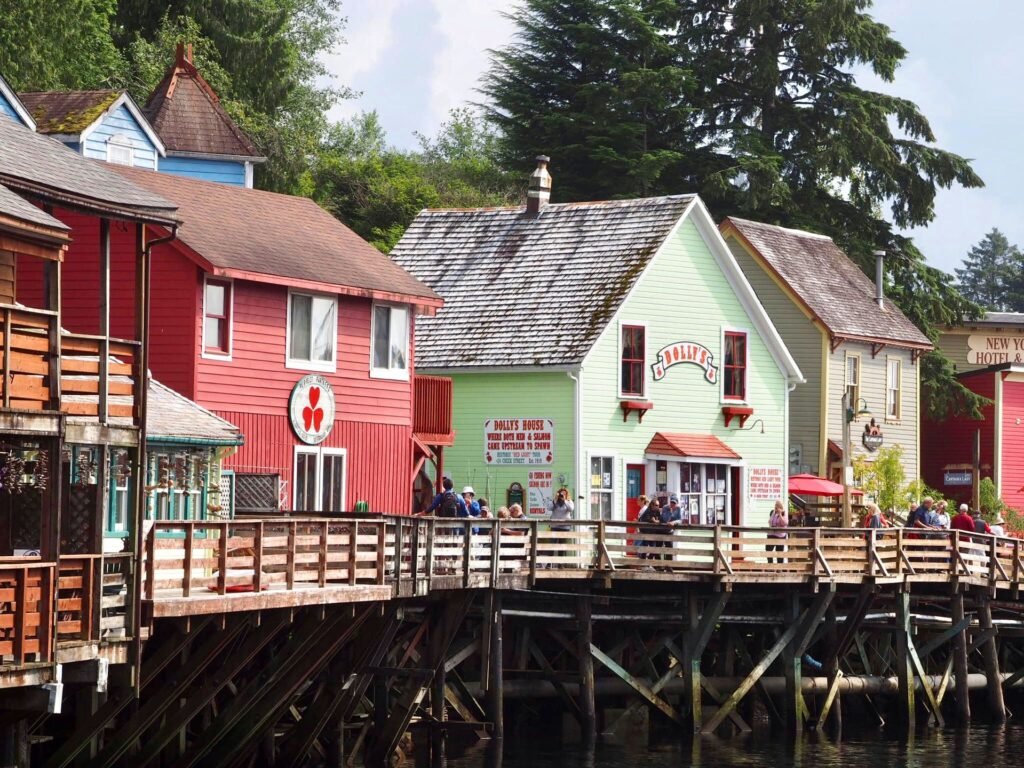
- Creek Street. A historic boardwalk built on pilings over the creek — colorful shops and the Dolly’s House Museum in the town’s former red-light district. A 5-minute walk from the dock and worth it for free.
- Misty Fjords National Monument. The headline splurge — a floatplane flightseeing tour over glacier-carved cliffs rising thousands of feet from the water. Around $300 and genuinely spectacular; book 4–6 weeks ahead. Browse options on Klook or Viator.
- Fishing. This is world-class king salmon water. Peak season (May–July) fills up, so book charters earlier than you’d think.
Walkability: downtown, Creek Street, and the Lumberjack Show are steps from the berths. Totem parks and Misty Fjords need transport or a floatplane.
Skagway — Gold Rush history and the railway
Skagway is a narrow valley town that once funneled tens of thousands of gold seekers toward the Klondike in 1897–98, and it still wears that history openly — the downtown buildings look much as they did a century ago. It’s also the driest of the three ports; it sits in a rain shadow and gets noticeably more sun, so this is the one port where sunscreen earns its place.
The signature stops:
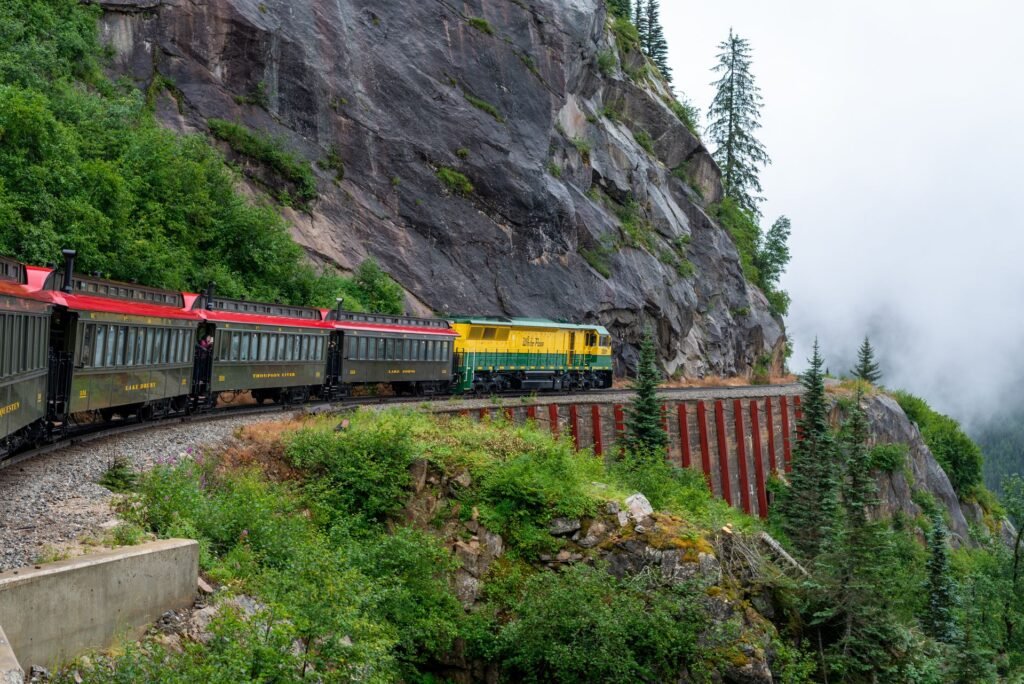
- White Pass & Yukon Route Railroad. This is the one genuinely unmissable Skagway experience — a historic narrow-gauge train climbing through the pass the gold seekers crossed, with dramatic mountain scenery the whole way. It’s a Skagway-only ride. Honest note: the railroad controls its own capacity and its direct booking site generally matches the cruise-line price, so there’s less of an independent-savings gap here than on other tours — but peak-season trains fill 4–6 weeks out, so book ahead either way.
- Klondike Gold Rush history on foot. The National Park Service runs a free ranger-led walking tour of the historic district — the best independent, no-cost way to experience Skagway. You can also tour a replica mining town, try gold panning, or head out to historic Dyea.
- Beyond town. E-bike rentals, hikes to spots like Yakutania Point, and trips toward the Yukon for those who want to get out of the center.
Walkability: Railroad, Ore, and Broadway docks are central, with free shuttles from farther berths. The historic district is entirely walkable; the railway and Yukon trips are the transport-based options.
Not always just the big three
Plenty of itineraries add or swap in a fourth stop. The most common are Sitka (Russian and Tlingit heritage, the Alaska Raptor Center, quieter than the big three) and Icy Strait Point near Hoonah (Tlingit-owned, near-guaranteed whale watching, and one of the world’s longest ziplines). Longer sailings and small ships reach more adventurous, crowd-free ports like Haines, Wrangell, and even wildlife-rich Kodiak. If your cruise goes beyond Juneau, Ketchikan, and Skagway — or you want it to — see our guide to Alaska’s lesser-known cruise ports.
Alaska cruise ports guide: quick planning cheat-sheet
- Book the splurges first. Helicopter and floatplane tours (Juneau glacier, Misty Fjords) sell out 6–8 weeks ahead in peak season. White Pass fills 4–6 weeks out. Whale watching, hiking, and cultural tours can usually be booked 2–4 weeks ahead.
- Budget roughly $400–$1,200 per couple for one meaningful excursion in each of the three ports, depending on how many splurges you pick. Flightseeing and helicopters are the cost drivers.
- Every port has a great free option: Mendenhall by public bus (Juneau), Creek Street and the totem walk (Ketchikan), the NPS Gold Rush walking tour (Skagway).
- Match the day to the glacier you’ll see — which one depends on your route (Glacier Bay vs. Tracy Arm vs. Hubbard) — and to your travel month (best time to cruise).
Plan your port days in one place
Three ports, a dozen possible excursions, different booking windows, and prices to compare — port planning is exactly where an Alaska trip turns into a wall of open browser tabs. Our Alaska Cruise Planner is a 25-tab system with a port-by-port section and an excursion tracker to keep it all straight, and the full Alaska Cruise Planning Guide ties the ports into the rest of your trip.
Treat each port as its own destination, book the signature experience early, and keep a free option in your back pocket for every stop.
Some links on this page are affiliate links. If you book through them, we may earn a small commission at no extra cost to you — it helps keep DreamTrip Daily’s guides free and honest.
Part of the Alaska Cruise Planning Guide — see all 12 posts in order →