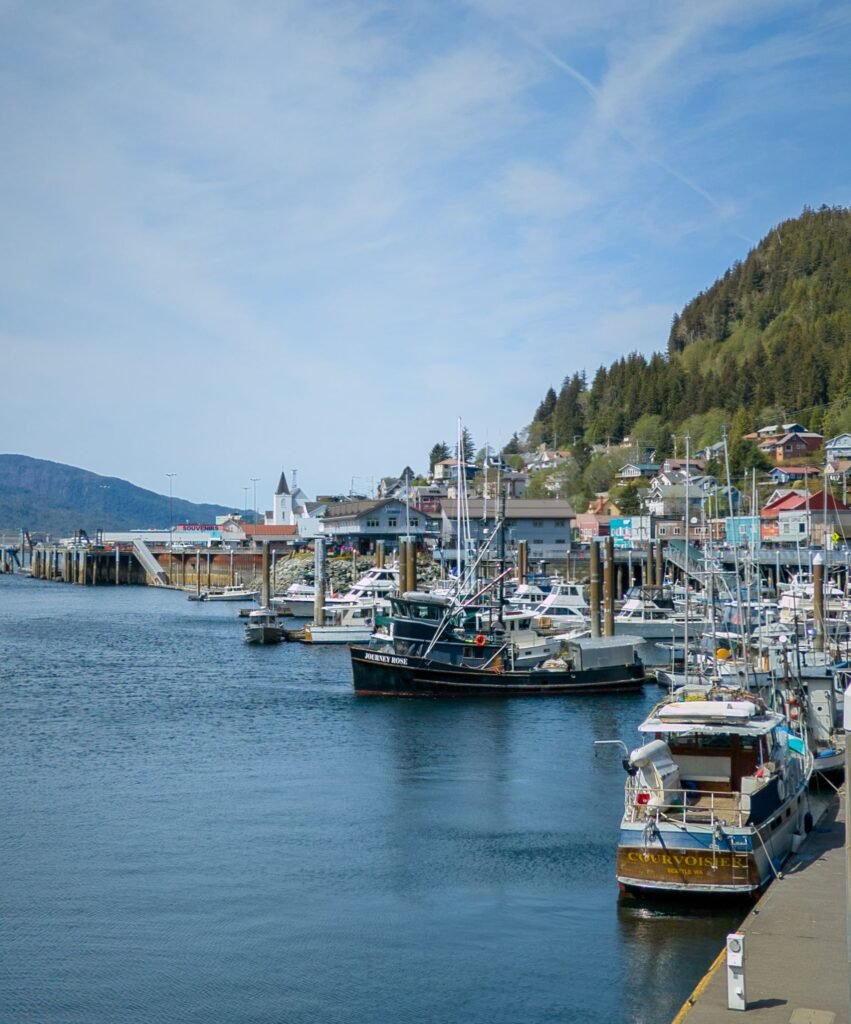
The Ketchikan Alaska cruise port is usually the first Alaska most cruisers ever set foot in — the first stop sailing north from Seattle or Vancouver — and it does not ease you in gently. It rains here. A lot. A working town squeezed onto a narrow strip of coast against the Tongass National Forest, where the weather is part of the deal, not a flaw in it. Lean into it and Ketchikan gives you the most totem poles standing anywhere on earth, a boardwalk built over a salmon creek, and the closest thing to unpolished, working Alaska you’ll hit on a cruise. Here’s how to spend the day.
First, which dock you get changes your whole day
This is the one thing to sort out before you plan anything, because Ketchikan runs a two-dock system and they are not equal.
Downtown berths (1 through 4): if you’re here, you’ve won. You step off the gangway straight into the heart of town — Creek Street is a 10–15 minute walk on flat sidewalks, and the visitor center sits right on the waterfront by the berths. Everything worth doing on a free day is on foot from here.
Ward Cove: the newer dock about seven miles north of downtown, used mostly by Norwegian and a rotating handful of other lines. There’s no walking into town from here. A free shuttle runs continuously to the downtown berths, and the ride itself is 20–30 minutes — but the ride is not the number that matters. Budget 45–60 minutes each way once you account for the queue, which can be long right after arrival and long again before all-aboard. A taxi runs roughly $30–$40. Rideshare exists in Ketchikan but drivers are few and waits can be long.
The shuttle drop-off point downtown varies by day and by ship, so confirm both the pickup location and the last return time before you wander off — that shuttle is your only realistic way back.
One thing that’s changed at Ward Cove: the Great Alaskan Lumberjack Show now runs a second venue at the Port of Ward Cove, about a block from the ship. If you’re docked there and the weather turns — which it will — you no longer have to spend two hours of shuttle time to find a covered activity.
Check your daily program or the port schedule so you know which dock you’ve got. Downtown means walk anywhere. Ward Cove means plan tighter.
The free, walkable Ketchikan Alaska cruise port day
If you’re downtown, Ketchikan is arguably the most walkable port in Alaska — and its best stuff is either free or close to it.
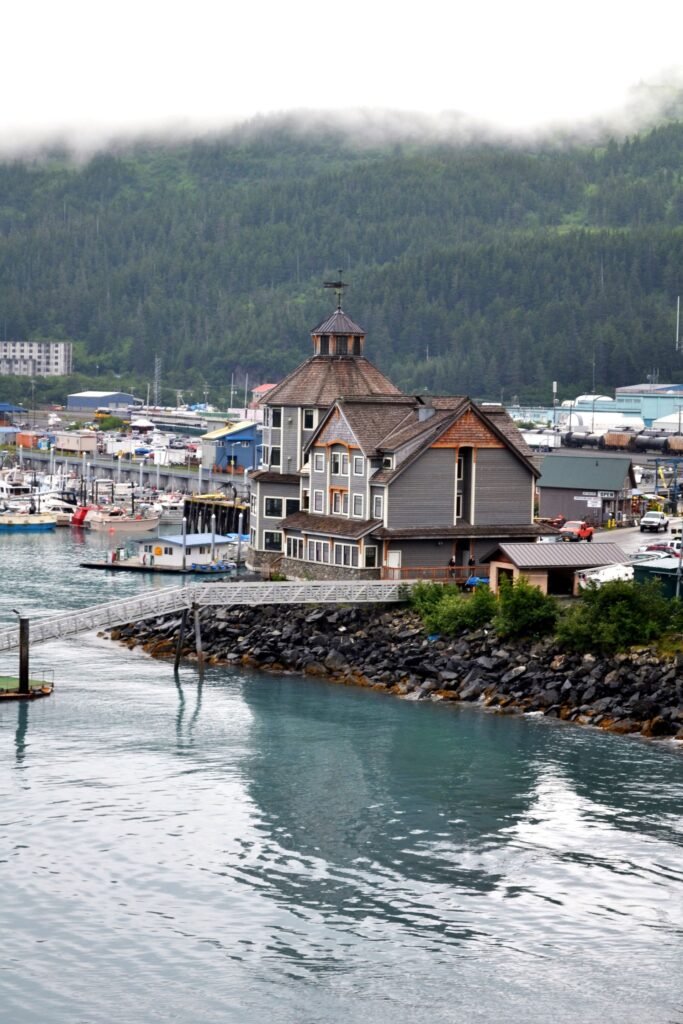
- Creek Street — the postcard. A historic boardwalk on pilings winding along Ketchikan Creek (it’s not a street at all). Once the red-light district, now galleries, shops, and museums. Free to walk. During the summer salmon runs you’ll watch fish fighting their way up the creek right below the boardwalk.
- The salmon ladder & Married Man’s Trail — from Creek Street, take the historic boardwalk-and-stairway up toward Park Avenue. Short uphill, but it delivers the best elevated photos of the ships in the harbor and the town below.
- Downtown totem poles — Ketchikan holds the world’s largest collection of standing totem poles, more than 80 around the city, with free viewing downtown, along Creek Street, and at Whale Park.
- Totem Heritage Center ($7 adults) — holds original 19th-century poles rescued from abandoned Tlingit and Haida village sites, and it’s the reason Ketchikan’s totem claim is more than marketing. Seniors 65+ pay $6; children 12 and under are free. A combined pass with the Tongass Historical Museum downtown is $10, which is the better buy if you’re doing both. It’s about a mile from the docks — walkable, or a short ride on the free downtown shuttle.
- Totem Bight State Historical Park ($5) — further out, north of town, with 14 poles and a replica clan house on a quiet stretch of shoreline. The $5 entry applies May 1 through September 30; the rest of the year it’s free. Reachable on the city bus for a couple of dollars each way.
- Southeast Alaska Discovery Center — a solid rainy-hour stop downtown to understand the rainforest and Native cultures around you.
A free day here is genuinely full: Creek Street, the salmon ladder, the downtown totems, a museum when the sky opens up. That’s real Ketchikan and it costs almost nothing.
Mapping each port’s free-vs-book options like this for your whole itinerary is exactly what our Alaska Cruise Planner does — one place for walkable sights, timing, and excursion notes per stop.
The excursions actually worth booking in Ketchikan
Ketchikan’s paid tours split cleanly: one bucket-list flight, one crowd-pleaser show, and a set of culture, wildlife, and adventure options. Prices move seasonally and operators adjust them without much notice, so treat any figure here as a starting point and confirm before you book.
Misty Fjords flightseeing — the splurge that’s worth it. Consistently ranked Ketchikan’s best excursion, and rightly. Misty Fjords National Monument is roughly 2.3 million acres of glacier-carved fjords, waterfalls, and granite walls rising thousands of feet straight out of the water — Norway-scale scenery with none of the crowds. It sits about 40 miles east of town and is reachable only by floatplane or boat, and the seaplane loop is the way to see it. The honest caveat: it is extremely weather-dependent — this is Ketchikan — so book it knowing you may need to pivot to a high-speed wilderness boat cruise if the clouds sit down. Book a refundable option if one is offered.
The Great Alaskan Lumberjack Show — the reliable rain-proof pick. Log rolling, axe throwing, pole climbing, chainsaw carving; covered, heated grandstands; multiple shows daily through the season. Cheerfully cheesy and genuinely impressive — the athletes are real competitors. This is the one to book when the forecast is grim, because it does not care about the weather. It now runs at two locations: downtown, a short walk from berths 1 through 4, and at the Port of Ward Cove, a block from the ship. Check the show’s own site for current pricing and times, and note that “show only” tickets are usually cheaper than the ship’s bundled tour.
Saxman Native Village & totems — a narrated cultural tour to one of the region’s premier totem collections and a clan house, often bundled with a city tour. A strong bad-weather option since much of it is indoors.
Crab feasts and the “Salmon Capital” food tours — Ketchikan calls itself the Salmon Capital of the World and leans in. All-you-can-eat Dungeness crab feasts and catch-and-cook wilderness dining tours are a genuine local specialty, and several run directly from the cruise docks.
Adventure and wildlife — rainforest ziplines, bear-viewing trips, UTV safaris, sea kayaking, and whale and wildlife boats (bald eagles, black bears, seals) round it out.
Ready to lock tours in? Compare current Ketchikan options through our excursions partner, Viator, or Klook — Misty Fjords flights and the popular crab feasts fill up for summer sailings.
Weather rule for Ketchikan specifically: book at least one rain-proof activity, keep a backup for the floatplane, and bring real rain gear. Ketchikan averages well over 100 inches of rain a year. A cheap poncho does not survive it.
Where to eat in Ketchikan
You’re in the Salmon Capital, so eat like it — fish, crab, and chowder are the whole point.
- Crab, all-you-can-eat: the Dungeness crab feasts double as excursions, but downtown seafood spots serve the local catch without booking a tour.
- Casual and fresh: the streets near the downtown berths are lined with seafood restaurants and counters — fish and chips, chowder, smoked salmon. It’s a compact, walkable food scene, ideal for a port day where you don’t want to lose an hour sitting down.
- A note on value: cruisers consistently report Ketchikan seafood pricier than smaller ports like Sitka for comparable crab — worth knowing if you’re crab-hopping down the coast.
A quick check of current hours before you commit is smart here, since some spots run cruise-season-only.
How to time your Ketchikan day
Ketchikan is one of six shore days covered in our Alaska Cruise Ports Guide, which maps every stop on a typical Inside Passage itinerary.
Ketchikan is often a shorter or first-day stop, and several ships can be in port at once — so downtown gets busy midday. The move: if you booked the floatplane or a boat, everything bends around its departure and weather window, so go early if you can. If you’re going free and self-guided, Creek Street and the totems absorb crowds better in the morning, and the covered Lumberjack Show or a museum is your rain-and-crowd escape valve midday.
And the cardinal port rule holds hardest here because of the two-dock split: if you booked a tour independently rather than through the ship, the ship will not wait — and if you’re returning to Ward Cove, that shuttle is your only way back. Buffer accordingly. It’s also mistake number one for first-time cruisers.
Ketchikan won’t sell itself as the prettiest port on the route. It’s the realest one — working boats, totems in the rain, salmon in the creek, the smell of the Tongass. Show up in good rain gear and let it be exactly what it is.
Ketchikan is one stop in our full Alaska Cruise Planning Guide. See every port, plus cabins, cost, and timing — start with the complete guide.
Disclosure: This post contains affiliate links. If you book through them, we may earn a small commission at no extra cost to you — it helps keep DreamTrip Daily running. We only recommend what we’d genuinely use ourselves.