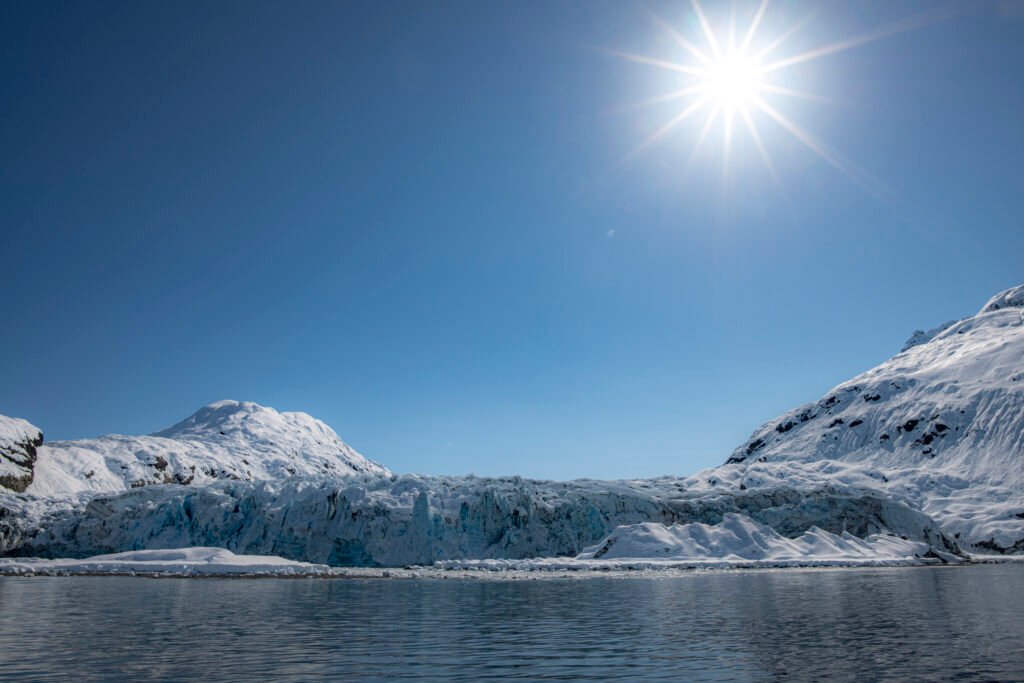
For most people, the glacier day is the Alaska cruise — the morning the ship slips into a quiet, ice-choked bay, cuts its engines, and slowly rotates so every deck gets the view. But here’s what the brochures don’t spell out: most cruises include just one glacier day, and which glacier you get depends entirely on your itinerary. Some cruises include no glacier day at all. So this isn’t a small detail — and the Glacier Bay vs. Tracy Arm vs. Hubbard choice is worth planning your sailing around.
The quick answer:
- Want the most dramatic calving? Hubbard Glacier.
- Want an intimate, narrow-fjord experience? Tracy Arm and the Sawyer Glaciers.
- Want variety, ranger narration, and the most time on scene? Glacier Bay.
How glacier days actually work
A glacier day is “scenic cruising” — you stay on the ship while it sails into a bay or fjord to a tidewater glacier (one that flows down to the sea and calves ice into the water). The ship typically parks in front of the ice, cuts engines, and revolves so port, starboard, bow, and stern all get equal viewing. You don’t need a particular cabin side for it (which is why the side-of-ship question matters less than people think).
Two honest realities: it’s cold at the rail even in summer — wind chill off the ice cuts deep, so bring the layers (packing list here). And weather and ice can foil any glacier day — ships routinely skip, shorten, or reroute a scheduled visit when a fjord is too icy or fogged in. If a glacier is your must-see, book an itinerary with more than one glacier opportunity.
The three at a glance
| Glacier | What it is | Itinerary type | Standout | The catch |
|---|---|---|---|---|
| Glacier Bay | 3.3M-acre national park, multiple tidewater glaciers | Many round-trip & one-way | Full day, park rangers, variety | Permit-limited access; calving less dramatic than Hubbard |
| Hubbard | Largest tidewater glacier in N. America | Mostly one-way / longer cruises | Biggest face, most dramatic calving | Usually one-way only; ice/fog can keep ships back |
| Tracy Arm / Sawyer | Narrow granite fjord, twin Sawyer glaciers | Round-trip (varies) | Intimate fjord, waterfalls, close on small ships | Big ships stay far back; 2026 sailings rerouted to Endicott/Dawes after a 2025 landslide |
Glacier Bay — variety and rangers
Glacier Bay National Park is the one most people picture, and it’s a UNESCO World Heritage Site northwest of Juneau. It’s permit-limited — the Park Service allows only about two cruise ships per day into the bay, which is a big part of why it feels pristine and why Princess and Holland America (who hold the long-standing permits) dominate it. (More on that in the cruise line guide.)
What makes it special is variety and time: ships spend most of a day in the park — up to about nine hours — sailing past multiple tidewater glaciers (you’ll most likely see Margerie, one of the park’s most active glaciers, which calves regularly, plus Grand Pacific, Lamplugh, and Johns Hopkins — the park’s rare advancing glacier — along the way). National Park rangers board the ship and narrate the geology, wildlife, and history as you go, pointing out seals on the ice, eagles, mountain goats, and the occasional whale.
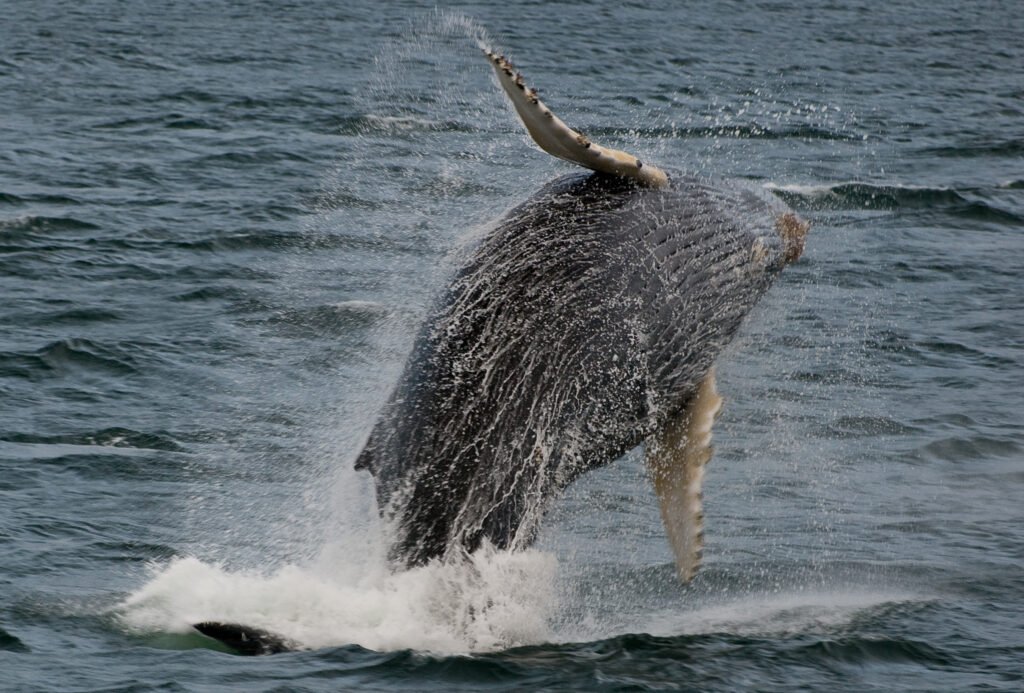
The honest tradeoff: the calving here is real but generally less thunderous than Hubbard’s, and Glacier Bay itineraries can cost a bit more. But for a first Alaska cruise, the full-day, multi-glacier, ranger-narrated experience is hard to beat.
Hubbard — the big one
If you want the jaw-drop, Hubbard Glacier delivers it. It’s the largest tidewater glacier in North America — a face up to about 400 feet high and roughly 6–7 miles wide, backed by some of the tallest peaks on the continent. And because Hubbard is advancing, it calves dramatically: massive, multi-story slabs of blue ice crack off and crash into Disenchantment Bay.
The catch is access. Hubbard sits far north, so it appears mostly on one-way (cross-Gulf) sailings to or from Seward or Whittier, and on longer 10–14 night cruises — only a handful of 7-night round-trips include it. (If a one-way sailing is on your radar, weigh it against the cruise vs. land tour decision, since one-way routes pair naturally with a Denali extension.) It’s an open bay rather than a tight fjord, and ice or fog can force ships to hold farther out — but Hubbard is so enormous that even a distant view is staggering.
Tracy Arm & the Sawyer Glaciers — the intimate fjord
Tracy Arm is a completely different feel: a narrow, steep-walled granite fjord about 45 miles south of Juneau, lined with waterfalls and deep-blue icebergs, ending at the twin Sawyer Glaciers (North and South Sawyer). In June you’ll often see harbor seals hauled out on the ice floes with their pups. It’s arguably the most dramatic scenery of the three — you’re threading a tight channel with cliffs rising on both sides.
The big caveat: large cruise ships have never gotten close to the Sawyer glaciers — the fjord narrows and chokes with ice, so the big lines sell small-boat excursions to close the gap (compare glacier excursions here). And there’s a bigger one for 2026: after an August 2025 landslide sent rock and ice into the fjord and triggered a tsunami, essentially every major cruise line is skipping Tracy Arm for the whole 2026 season and rerouting to neighboring Endicott Arm to view Dawes Glacier — a similar, slightly straighter fjord larger ships handle better. Small expedition ships may still enter. So if a 2026 big-ship itinerary lists “Tracy Arm,” expect Endicott Arm and Dawes in practice — no downgrade, still a spectacular glacier day.
Bonus: College Fjord
Worth knowing if you’re eyeing a one-way cruise. College Fjord, in Prince William Sound, holds five tidewater glaciers (named for East Coast colleges by an 1899 expedition) and appears only on one-way sailings to or from Whittier/Seward — often paired with Hubbard on the same cross-Gulf route, giving you two glacier days in one trip.
So — Glacier Bay vs. Tracy Arm vs. Hubbard: which should you book?
- First Alaska cruise, want the classic experience: Glacier Bay — variety, rangers, and the most time on scene.
- You want maximum drama and calving: Hubbard — book a one-way or longer itinerary to get it.
- You love tight, cinematic scenery (especially on a small ship): Tracy Arm / Sawyer, knowing you’ll get Endicott/Dawes in 2026.
- You want more than one glacier: a one-way cross-Gulf sailing (Hubbard + College Fjord) or a 14-night back-to-back that hits all three.
Two rules hold no matter what: read the itinerary and confirm the glacier is named (not just “scenic cruising”), and if it’s a bucket-list priority, favor a sailing with a second glacier opportunity as insurance against weather and ice.
When you’re ready, you can compare Alaska sailings by glacier itinerary here. And to keep glacier days, ports, cabin, and budget organized while you decide, our Alaska Cruise Planner lays it all out across 25 tabs — part of the full Alaska Cruise Planning Guide.
Whichever ice you end up in front of, the moment the engines cut and the glacier fills your view, you’ll understand why people plan a whole trip around it.
Some links on this page are affiliate links. If you book through them, we may earn a small commission at no extra cost to you — it helps keep DreamTrip Daily’s guides free and honest.
Part of the Alaska Cruise Planning Guide — see all 12 posts in order →